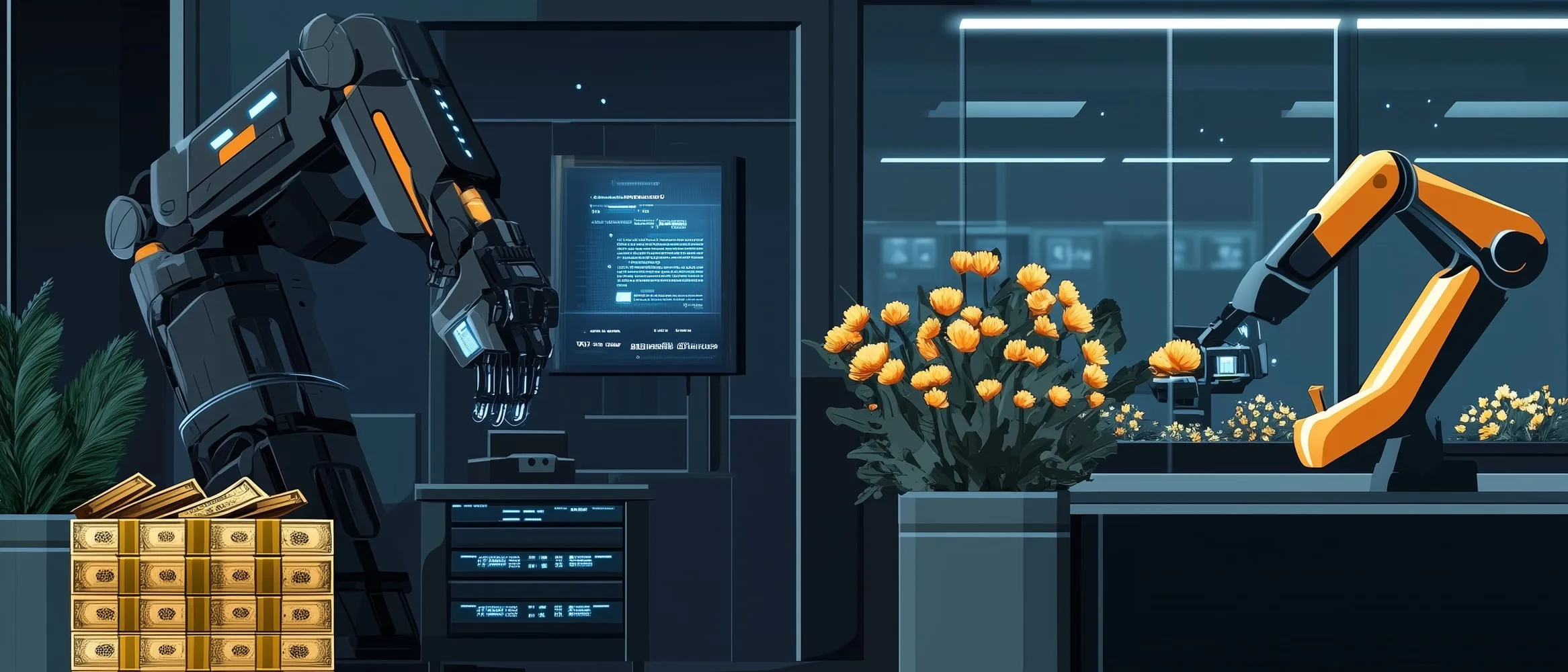
In today’s rapidly evolving business landscape, automation has become less of a luxury and more of a necessity. Companies across industries are leveraging automation tools to streamline operations, reduce costs, and gain competitive advantages. However, one crucial decision businesses face is whether to invest in custom-built automation solutions or opt for ready-made, off-the-shelf products.
The Automation Imperative
Before diving into the custom versus off-the-shelf debate, it’s worth understanding why automation matters. Automation tools can significantly reduce manual work, minimize human error, improve process consistency, and free up valuable human resources for more strategic tasks. For businesses of all sizes, the right automation strategy can be transformative.
Off-the-Shelf Automation Tools: The Ready Solution
Advantages
Faster Implementation: Pre-built solutions can be deployed quickly, often within days or weeks rather than months.
Cost Predictability: These tools typically have transparent pricing models with predictable subscription fees.
Proven Reliability: Off-the-shelf tools have been tested across multiple environments and use cases.
Continuous Updates: Vendors regularly release updates, security patches, and new features without additional development costs.
Built-in Support: Most come with dedicated customer support, documentation, and user communities.
Limitations
Limited Customization: While many offer configuration options, they may not adapt perfectly to unique business processes.
Potential Feature Bloat: You might end up paying for features you never use.
Integration Challenges: Connecting with existing legacy systems sometimes requires workarounds.
Dependency on Vendor: Your business becomes reliant on the vendor’s roadmap and continued existence.
Custom Automation Solutions: Tailored to Fit
Advantages
Perfect Alignment: Custom solutions are built specifically for your unique business processes.
Competitive Differentiation: They can deliver capabilities your competitors don’t have.
Complete Control: You own the solution and can modify it as needed.
Seamless Integration: They’re designed to work with your existing technology stack.
Scalability: Custom solutions can grow with your business in exactly the ways you need.
Limitations
Higher Initial Investment: Development costs are typically much higher than off-the-shelf licenses.
Longer Time-to-Value: Building custom solutions takes time, often months or more.
Maintenance Responsibility: Your team (or your vendor) must maintain and update the solution.
Talent Requirements: You’ll need access to developers with the right skills, either in-house or contracted.
Making the Right Choice: Decision Framework
Consider these key factors when deciding between custom and off-the-shelf automation tools:
1. Business Process Uniqueness
Off-the-shelf fits when: Your processes follow industry standards with minimal variation.
Custom fits when: Your processes are highly unique and provide competitive advantages.
2. Budget Constraints
Off-the-shelf fits when: Capital expenditure must be minimized, and predictable operational expenses are preferred.
Custom fits when: You can invest upfront for long-term ROI and lower ongoing costs.
3. Timeline Pressures
Off-the-shelf fits when: You need a solution implemented quickly.
Custom fits when: You can afford a longer implementation timeline for a better-fitted solution.
4. Technical Resources
Off-the-shelf fits when: You have limited technical expertise in-house.
Custom fits when: You have access to talented developers or trusted development partners.
5. Growth Trajectory
Off-the-shelf fits when: Your needs are relatively stable and predictable.
Custom fits when: Your business is rapidly evolving in unique ways.
The Hybrid Approach: Getting the Best of Both Worlds
Many successful businesses are finding value in hybrid approaches:
- Start with off-the-shelf, customize later: Begin with a commercial solution and develop custom components as needs become clearer.
- Custom core, off-the-shelf peripherals: Build custom solutions for your mission-critical processes but use commercial tools for standard functions.
- Extensible platforms: Choose off-the-shelf platforms with robust APIs and extension capabilities that allow for customization.
Final Thoughts: There’s No One-Size-Fits-All
The right choice depends entirely on your specific business context. Both approaches have merit, and many businesses find their optimal solution involves elements of both. The most important factor is aligning your automation strategy with your broader business objectives and unique operational realities.
By carefully evaluating your specific needs against the frameworks outlined above, you can make an informed decision that powers your business forward in an increasingly automated world.